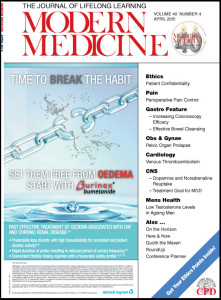

Current Concepts of Low Testosterone Levels in Ageing Men

Current Concepts of Low Testosterone Levels in Ageing Men – MM1504

Low testosterone levels are associated with increased risk of cardiovascular disease and increased mortality in ageing men. Men with pathologically based hypogonadism should be considered for testosterone supplementation. For older men suspected of being androgen deficient in the absence of pituitary or testicular disease, controversy exists because symptoms can be nonspecific, the definition of low testosterone levels is under debate and the risks of extended treatment are uncertain.

Modern Medicine – April 2015

Dopamine and Noradrenaline Reuptake

Dopamine and Noradrenaline Reuptake – MM1504

The mechanism of action of bupropion is still uncertain but may be related to inhibition of presynaptic dopamine and noradrenaline reuptake transporters. The activity of vesicular monoamine transporter-2, the transporter pumping dopamine, noradrenaline and serotonin from the cytosol into presynaptic vesicles, is increased by bupropion and may be a component of its mechanism of action. Bupropion is approved for use in major depression and seasonal affective disorder and has demonstrated comparable efficacy to other antidepressants in clinical trials.

Modern Medicine – April 2015

Venous Thromboembolism | Prevention, Investigation and Treatment

Venous Thromboembolism | Prevention, Investigation and Treatment – MM1504

People at risk of developing venous thromboembolism (VTE) need to be identified so that they can commence prophylaxis, which may prevent significant morbidity and mortality. Investigation of the underlying cause of VTE is essential because this affects the duration and type of treatment.

Modern Medicine – April 2015

Effective Bowel Cleansing Improves Examination Results

Effective Bowel Cleansing Improves Examination Results – MM1504

Colonoscopy constitutes the principal investigation for colorectal neoplasms due to its ability to detect and remove most of precancerous lesions. Diagnostic accuracy and therapeutic safety of colonoscopy strictly depends upon the quality of bowel cleansing. The ideal preparation for colonoscopy should reliably empty the colon from all faecal material allowing the optimal visualisation of the entire colonic mucosa without causing great patient discomfort or significant shifts in fluids and electrolytes.

Modern Medicine – April 2015

Pointers for Increasing Colonoscopy Efficacy

Pointers for Increasing Colonoscopy Efficacy – MM1504

In the past decade, the colonoscopy procedure has been largely studied to improve colorectal lesions detection resulting in the identification of quality indicators for colonoscopy procedure. Successful colonoscopy depends upon a number of factors including correct cecum intubation, cleaning of the colon, careful mucosal inspection and operator experience. With the rapidly rising costs of healthcare and the need to rationalise spending, it is important to spare costly repeat procedures, as in the cases of incomplete colonoscopy. Bowel preparation is essential for both the quality of the colonoscopy and the adenoma or adenocarcinoma detection rate.)

Modern Medicine – April 2015

Food Allergies are an Increasing Global Epidemic

Food Allergies are an Increasing Global Epidemic – MM1504

Food allergy is defined as an adverse immune response towards food proteins or as a form of a food intolerance associated with a hypersensitive immune response. Many reported food reactions are not allergic but are in fact intolerances. Food allergy often presents to clinicians as a symptom complex. According to clinical presentations and allergy testing, there are three types of food allergy: immunoglobulin E (IgE) mediated, mixed (IgE/Non-IgE), and non-IgE mediated (cellular, delayed type hypersensitivity).

Modern Medicine – April 2015

Effective Perioperative Pain Control Reduces Hyperalgesia

Effective Perioperative Pain Control Reduces Hyperalgesia – MM1504

Pain arising from impending or actual tissue injury has an important physiological role, protecting the body from injury and promoting healing once injury has occurred. However, if pain persists in the absence of ongoing nociceptive input from the periphery, or exceeds the pain normally caused by ongoing nociceptive input, it loses its physiological function. Pain of this nature is therefore called maladaptive or dysfunctional pain. Dysfunctional pain is thought to arise from altered processing of nociceptive information in the central nervous system.

Modern Medicine – April 2015

Verified by ExactMetrics