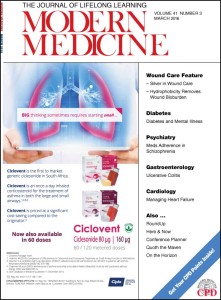

Hydrophobicity Removes Wound Bioburden, Aiding Healing

Hydrophobicity Removes Wound Bioburden, Aiding Healing – MM1603

Wound infection is one of the main areas of concern in the management of the wound environment. Infection complicates treatment and impedes the healing process by damaging tissue, reducing wound tensile strength and inducing an undesirable inflammatory response.

More recently, wound dressings have been introduced into clinical practice that reduces bacteria by adsorbing bacteria on the dressing surface through a hydrophobic effect.

Modern Medicine – March 2016

The Use of Silver in Wound Care: A Review

The Use of Silver in Wound Care: A Review – MM1603

Cutaneous wound healing is a complex series of events with chronic wounds placing a significant cost burden on health care systems globally. Silver has been used medicinally for centuries, due to its potent antimicrobial properties. The newer silver dressings, such as nanocrystalline silver dressings, offer advantages over earlier silver preparations as they are better able to maintain biologically active concentrations of silver. Therefore, less frequent dressing changes are needed, improving patients’ perceptions of pain and lowering treatment costs.

This article highlights important points from a 2012 consensus document on the appropriate use of silver dressings in wounds as well as experimental evidence on the efficacy of silver dressings.

Modern Medicine – March 2016

February edition available now

MM1602_Cover

The February edition of Modern Medicine is available now. In it, we include a number of articles focused on womens health.

We also include the first Ethics CPD article of the year, on Doctors in the Court.

With our February edition we will also begin including the complete references for all of the articles included in the edition; these can be found at the end of the digital edition.

Modern Medicine, the journal that’s with you wherever you go

Borderline Personality Disorder – The difficult patient

Borderline Personality Disorder – The difficult patient – MM1602

GPs are often the first point of contact for patients with borderline personality disorder (BPD) and this encounter can be critical in engaging these patients with health services that can provide support and treatment.

BPD is a mental disorder and a personality disorder according to the Diagnostic and Statistical Manual of Mental Disorders(5) and is characterised by distressing emotional states, difficulty relating to other people and self-harming behaviour. Common presentations include visits to emergency departments with self-harm, or seeing their GPs with suicidality, low mood or treatment-resistant depression.

Modern Medicine – February 2016

Dry Eye Disease, a Frequent Ophthalmological Diagnosis

Dry Eye Disease, a Frequent Ophthalmological Diagnosis – MM1602

Dry eye disease (DED) is one of the most frequently established diagnoses in ophthalmology, and represents a growing public health concern, with consequences that remain widely underestimated. This pathology causes significant impact on visual function, which may affect quality of life and work productivity.

Modern Medicine – February 2016

Overactive Bladder in Women Achieving effective management

Overactive Bladder in Women Achieving effective management – MM1602

Overactive bladder (OAB) has been defined as urinary frequency and nocturia (night-time voiding more than once per night) in the setting of urgency (a sudden, compelling desire to void that is difficult to defer) and in the absence of pathological or metabolic conditions that may explain the symptoms. Female urinary incontinence is a common problem with an estimated prevalence of 25%. Quality of life is significantly impacted by urinary incontinence, often leading to embarrassment and social isolation.

Modern Medicine – February 2016

The Doctor in Court

The Doctor in Court – MM1602

Despite these fervent wishes of our Minister of Health, we are now five years down the line and the number of doctors found in the corridors of our Courts is increasing in leaps and bounds.
There are three reasons why doctors are likely to be found in court;
• as the accused “in the dock”,
• as a factual witness giving first-hand evidence regarding a patient they have treated or
• as an expert medical witness (a witness of opinion) who is there to interpret the medical facts before the court.

Modern Medicine – February 2016

Verified by ExactMetrics